Way to Hike to Machu Picchu
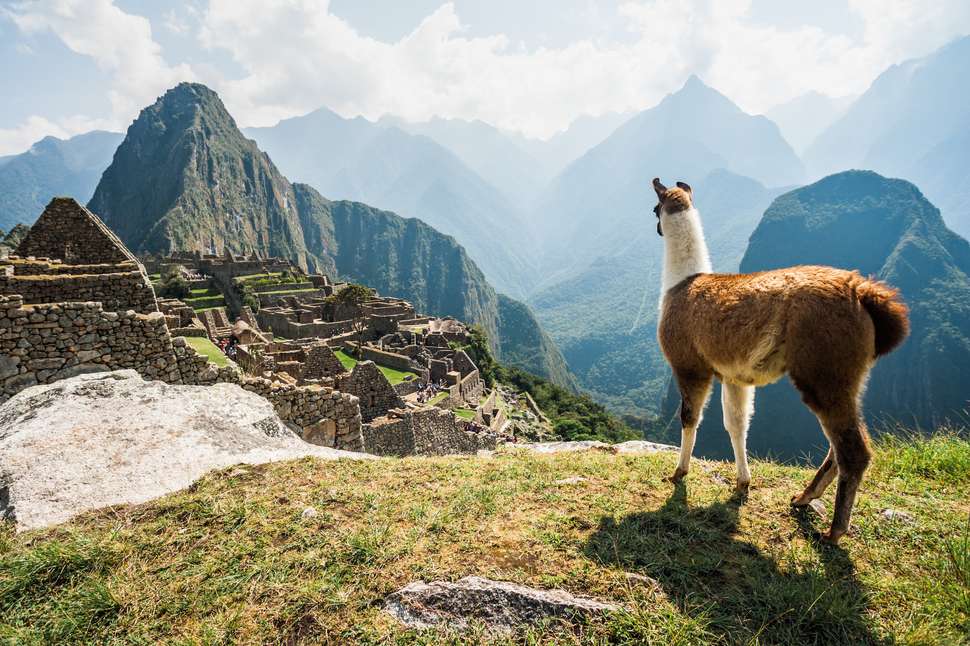
More than 1 million individuals visit Machu Picchu consistently. The fifteenth century Inca bastion, settled in the rugged pinnacles of the Andes, was worked in the mid-1400s and occupied for not exactly a century prior to the Spanish Conquest started and the Inca Empire fell. Today, it's an UNESCO World Heritage Site, one of the New Seven Wonders of the World, the most well known vacation spot in Peru, and a standout amongst the most Instagrammed puts on earth.
In the same way as other of the world's most remarkable highlights, both common and developed, Machu Picchu and the Inca Trail - the notable course that pursues similar strides into Machu Picchu that the Inca took about 600 years prior - have moved toward becoming casualties of their own ubiquity. The fortification is so prominent with timid, littering, landmark damaging visitors, that this year, new principles ensure the site and control packing, including some really fantastic thoughts like restricting single-use plastics and binding visits to four successive hours (here's the full slate of new guidelines). In the mean time, disintegration brought about by wild the travel industry has since a long time ago drove the Peruvian government to top Inca Trail climbing grants at 500 every day, around 200 of which are left for visitors after you represent all the staff expected to go with them.
Climbing to Machu Picchu is practically synonymous with the Inca Trail. The Inca Trail is really three covering trails sewed together - Mollepata, Classic, and One Day - and the course to Machu Picchu is a little piece of an a lot bigger system of trails that length a huge number of miles crosswise over South America.
It might be the main trail that will take you straight up to the bastion and store you at the Sun Gate (Inti Punku), yet it isn't the main trail you can climb.
The Salkantay Trail
It's somewhat strange, however climbing to Machu Picchu is extremely a unique little something where it's about the adventure, not the goal. In the event that the purpose of your excursion is to see Machu Picchu, at that point that is fine - there's a train you can take from Aguas Calientes that will spare you some time and cash. However, in the event that you're going to climb to Machu Picchu, at that point the purpose of your excursion is the climb.
Despite the fact that it comes up short on the name-brand haul of the authentic Inca Trail, the Salkantay Trail is really an all the more testing climb. All the more critically, it's an additionally animating one, giving substantially more assorted variety in view and territory; more on that in a minute. While climbers on the Inca Trail will much of the time bottleneck, Salkantay is less packed by a factor of 2 or 3. Additionally, it's less expensive.
Truly, you have to go with a visit organization
I am dependably for free travel over sorted out visits, however there are places you can't get to individually. Machu Picchu is one of these spots, paying little heed to what trail you take (regardless of whether you take the train, despite everything you'll have to enter with a guide). My gathering went with Salkantay Trekking, a visit organization that drives treks on the Inca Trail and a bunch of different options other than Salkantay, yet centers only around Machu Picchu.
The Inca Trail can include a great deal of moving for position and some nearly charmless housing, yet on Salkantay, you're dozing in glass stargazing igloos and voyaging a for the most part remote way that guarantees your trek is not the slightest bit reminiscent of a steers crowd, at any rate until Day 5. The Salkantay Trekking cooks likewise utilize you with multi-course suppers that are flavorful in taste and really stunning in amount, similar to a comedic march of delectable dishes you will valiantly attempt and neglect to wrap up.
You can pick how much time you spend climbing
Despite trail or visit organization, most treks to Machu Picchu last somewhere in the range of two and seven days. My gathering went with the five-day Salkantay Classic, and - while the facts confirm that I have nothing to contrast it with - this still feels to me like the right decision as far as both course and time span.
On the off chance that you don't occur to think a lot about the topography, you most likely envision the climb to Machu Picchu as one that goes up, however it truly goes down. Instead of beginning at the base of a mountain and working your way to the top, you're beginning in Cusco, which is around 11,000 feet above ocean level, while Machu Picchu is at 7,972 feet above ocean level. Without a doubt, on Days 1 and 2 of this trek, you'll be scaling crosswise over cold ice sheets, achieving a pinnacle rise of 15,255 feet. In any case, on Days 3 and 4, you're diving through the moist, tropical cloud woods, shedding layers as you go. Day 5 is Machu Picchu.
What you can expect with a visit organization
Comforts will obviously change a bit from organization to organization, yet the general terms are the equivalent. The 5-day trek runs $450 per individual, which covers your suppers, water, lodging (counting your inn in the close-by town of Aguas Calientes), duffel sack bearing donkeys for the stuff you would prefer not to convey while you're climbing, train ticket in Aguas Calientes, transportation to and from your inn in Cusco, baggage stockpiling in Cusco while you're climbing, section into Machu Picchu itself, tea, snacks, and obviously your phenomenal trail guides. There's additionally a genuinely ignored historical center about a half-hour stroll from Aguas Calientes you can visit for around $7, and adored warm showers you can enter for around $3.
Ensure you have money (in Peruvian sol) for tips - the sum will fluctuate contingent upon trek size and number of staff individuals, however notwithstanding tips for your aides your gathering should plan to on the whole kick in on a pot for the cooks and another for the doormen. Approach your aides for the favored method for dispersing them toward the end.
What to pack when climbing Machu Picchu
There are actually just two or three basics you have to ensure you have dealt with before you head to Peru, the first would be comfortable climbing boots that you've in a perfect world officially tried in the field. I, in any case, did not have climbing boots, and am exceptionally satisfied to report that I made it the whole path in Timbs. I accept I was in marginally more agony than every other person who accompanied boots that were really intended for climbing, yet sincerely it was not awful.
Portable beds are excluded, so in the event that you have a pleasant one, bring it. Then again, you can lease (clean!) ones from the organization for about $5 every night. Every other person in my gathering leased strolling shafts ($20 level rate) however I didn't and here I am, still alive. A great many people will convey a knapsack to convey while climbing that is discrete from the more bag type baggage they conveyed for the excursion to Peru in general, however as far back as exploring I possess no gear and utilize a similar single rucksack for everything - this has dependably served me fine. You certainly need a sound supply of sunscreen, bug splash, your favored item for tending to and additionally counteracting rankles, and - in all respects critically - loads of activity neighborly layers. You need a major winter coat for a considerable length of time 1 and 2, where the trail is reminiscent of that go through the Misty Mountains they attempt to cross in The Lord of The Rings before they pivot and experience the mines, however all through Day 3 and Day 4 there's a kind of aggregate gathering shedding as everybody strips down to base layers, perhaps short sleeves. You're in the rainforest now.
The other thing every other person in my gathering decided on that I didn't was drug for height disorder. I didn't, on the grounds that I have both a high sentiment of myself and poor hierarchical aptitudes, and on the off chance that you are pondering whether I hurled anytime the appropriate response is that I hurled at various focuses. In any case, three out of the four individuals from our gathering likewise hurled, which we credit incompletely to arriving hungover for what ended up being a winding, lurchy transport ride.
Availability
There are no age confinements for climbing the Salkantay Trail. You should be marginally physically fit, however presumably not so fit as you might suspect. By and by I discovered Day 1 of our trek to be the most attempting, on the grounds that I was all the while changing in accordance with the elevation because of my enduring responsibility to being a sham, yet Day 2 makes more progress and includes the most tough climbing. It is commonly viewed as the hardest day.
Aides do convey supplemental oxygen should anybody become sick amid the trek, and on the off chance that you have to (or just need to) you can ride one of the donkeys amid the tough part for a little expense.
In January 2019, travel organization Wheel the World revealed the main wheelchair-open voyage through Machu Picchu. Bundles begin at $398 for single-day visits to the Machu Picchu bastion, up to $2,900 for six-day visits around Machu Picchu and Cusco. The cost incorporates suppers, guides, convenience, available transportation (counting to and from the airplane terminal) and versatile rigging including uncommonly planned wheelchairs for covering the Machu Picchu landscape.
At the point when to go
July and August are the stature of the traveler season, so none of that in the event that you can support it - except if, that is, you're resolved to. February, in the interim, is the tallness of the blustery season, and furthermore when the Inca Trail shuts every year for support, so tried and true way of thinking for the most part holds this is a terrible month to go - however on the off chance that you intend to climb Salkantay, need dispersed groups in the fortress itself, and are not squeezed about getting wet, at that point February may really be to further your potential benefit.
While the predetermined number of grants implies those wanting to climb the Inca Trail must save numerous months ahead of time, with Salkantay you can book your trek presumably five to about two months out (more in case you're intending to visit amid the mid year, however). By and large, your best wagers are either April/May or September/October. I went in April. It was pleasant.
Be that as it may, before you begin, sort your height infection in Cusco
In light of the high height, you can't simply fly into Peru and start climbing right away. You have to close off some time in advance to stick around Cusco and let your body adapt.
Give yourself at any rate a few days in the city, four on the off chance that you have sufficient energy. You'll be o


Comments
Post a Comment