Ferrari GTC4Lusso
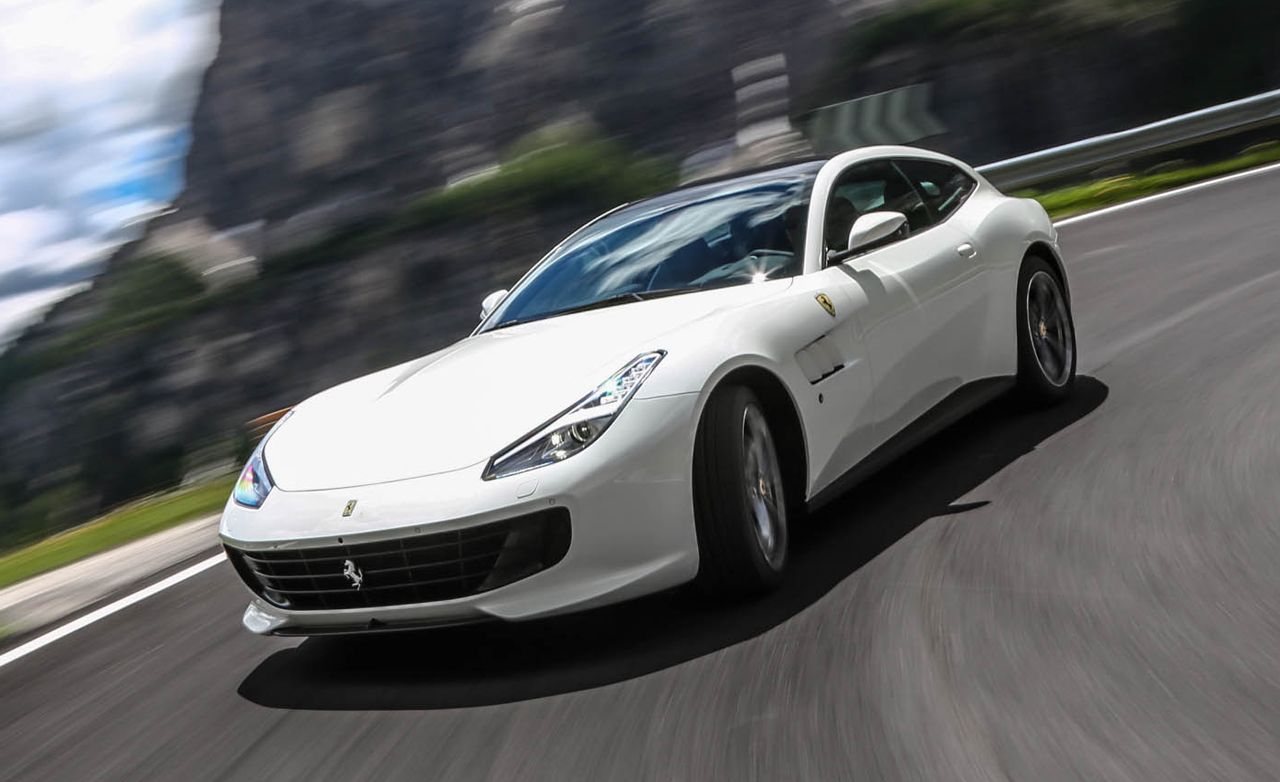
That the 2017 Ferrari GTC4Lusso is no less than one moment quicker around Ferrari's Fiorano test track than the wagonoid FF that it replaces is good for nothing. Somewhat, this is on the grounds that it's basically a report on a similar auto. But on the other hand this is on account of, as per Stefano Varisco, the man in charge of the Lusso's vehicle elements, enhancing lap times wasn't an objective for the Lusso advancement group. More to the point, the all-wheel-drive Lusso is unmistakably a GT auto, a machine made for triple-digit sweepers and abandoned roadways more than for Alpine curves. Hot laps? They're in the Lusso's domain however unquestionably not in its line of sight.
So it is important little when we wind up in a motorcade of visit transports, cyclists, and even game bicycles working with a beastly dismissal for speed while climbing curve streets in the Italian Alps. That a Ferrari ought to be so slighted alone turf is bewildering. That this impassion is shown for the most part by Germans on vacation isn't. Perhaps the drive course was picked by Ferrari in a hidden endeavor to feature the Lusso's most noteworthy excellence: express consideration.
Ferraris, all things considered, are generally married to the desire for commotion: soul-burning symphonic theater. A 680-pull V-12-fueled Ferrari lacking such auditorium is as conflicting as a dark fire engine. Should the Lusso's twofold sheet windows, calmer fumes, and additional sound stifling still wave the skipping horse hail? Could an elderly person's Ferrari still be a Ferrari? All the more insightfully, would it be advisable for it to be? The aggregate heart of the tifosi just skirted a beat.
Drives Like a Ferrari
In any case, it works. The Lusso doesn't make itself little on these streets. It just gulps down them. There's nothing unpretentious here, yet there is a quiet certainty about its capacities. Completely adhered to the ground, the front tires pursue each order from the gently weighted directing wheel, and, thusly, whatever remains of the huge car complies. Try not to believe you will slide this auto; it isn't so much that sort of machine. It never overburdens its front tires, however neither does it need to control out sideways. On the off chance that there's oversteer to be had, even at low speed, it requests the sort of information sources that regularly result in lament.
The V-12 conveys. In spite of the fact that it doesn't explode the 2.1-ton Lusso out of moderate corners the way that, say, a Nissan GT-R's twin-turbo six does, it satisfies in a 8250-rpm swell that makes motors with a large portion of the barrels feel like toys. Moving the seven-speed double grip programmed at speed is hampered just by a rare need to discover the segment settled move paddles. It is an uncontrollably adaptable thing, this motor.
Yet, the Lusso isn't immaculate. Its transmission wavers irrationally in low-speed moves where exactness is generally required. The controlling exertion is light to the point that directing it wisely can be testing. What's more, it's calmer than the FF, particularly out of gear. Its fumes is purposefully quieted, which Ferrari says is to all the more likely suit proprietors who will drive these autos day by day.
In any case, after three hours, in the wake of demonstrating its taillights to each Iveco truck in the Alps, we understand reality about the Lusso is obvious: Ferrari has made the world's best response to the Porsche Panamera. In any case, overlook Germanic unemotionalness; this four-situate, all-wheel-drive hatchback is trickling with Italian prosper. Truly, it has two less entryways than a Panamera. What of it? In case you're extremely worried about pulling four individuals, purchase a Mercedes-Benz S-class. All hips and backside, the GTC4Lusso is likewise roughly 100 percent simpler on the eyes. Also, truly, it's calm, with the exception of at full throttle. At that point it's Monza in September. Furthermore, it's quick.
Only a Revised FF?
Which conveys us to the point: The GTC4Lusso is Ferrari's trade for its FF, a Ferrari whose character was dependably being referred to, torn among realism and enthusiasm. The Lusso admissions better on style alone, with more forceful back bumpers, etched sides, and a bigger grille. Dimensionally, the two are for all intents and purposes indistinguishable, both riding a 117.7-inch wheelbase, which is 1.6 inches longer than that of the as of late uncovered second-age Porsche vehicle.
The Lusso's V-12 gets a higher pressure proportion from updated cylinders. Combined with equivalent length six-into-one ventilation systems, the motor changes yield an extra 29 strength and 10 lb-ft of torque over the FF. The double grasp transaxle is unaltered and houses an electronically controlled grip type constrained slip differential.
In spite of the fact that it's made up to a great extent of indistinguishable equipment from the FF, the GTC4Lusso's core move is its uncommon all-wheel-drive framework, which utilizes a two-speed gearbox driven specifically by the nose of the crankshaft. The two-speed's range is adequate to cover the back transaxle's initial four riggings. In fifth through seventh riggings, the Lusso is a back wheel-driver. Grips on each front half-shaft permit torque vectoring to each front wheel. A more effective warmth exchanger with expanded warm limit empowers the conveyance of more torque to the front wheels in dry conditions.
New Hardware Inside and Out
Raise wheel directing is new to the Lusso. First presented on the F12tdf, the framework's reaction relies upon various factors, however more often than not it controls the back tires indistinguishable way from the fronts. This methodology gives the driver more certainty by giving reliable input, as indicated by Varisco. Out-of-stage raise directing, the kind that crabs the back around corners, is held just for turn-in and restricted to about 0.1 second per use to start auto revolution.
Inside, the Lusso has gone full Formula 1, with essentially every optional control mounted on the controlling wheel. That incorporates the start, the headlights, the turn flags, the windshield wipers, the manettino execution mode dial, and the telephone controls. There are roller switches on the back of the spokes controlling sound volume and instrument-board design. Also, in a gesture to the truth of unpleasant streets, there's a catch that incidentally relaxes the magnetorheological dampers without requiring the driver to change out of Sport mode.
The infotainment is redesigned with an all-new 10.3-inch touchscreen joined by a committed handle and-catch interface. Joined, these make speedy work of sound, telephone, and ventilation needs. The framework is quick and instinctive and has usable controls—an uncommon trifecta, especially among low-volume carmakers.
The inside awes, however close to that of a Porsche at a large portion of the cost. Sewed calfskin is all over. The round air vents are a wonderful marriage of capacity and style. In any case, the carefree level base guiding wheel would appear to be strange in any street auto. The back seats are usable if the fronts aren't involved by somebody taller than six feet, yet the back isn't a place you'll discover grown-ups volunteering to ride—in any event, not those who've officially encountered a V-12 Ferrari.
The GTC4Lusso will cost about $300,000 when it hits U.S. showrooms in the not so distant future. It's presumable the most usable and acculturated street auto the organization has ever constructed. Be that as it may, has its fairness made it less virile? To a lesser extent a Ferrari? The appropriate response comes as we turn off solidness control, open the throttle, and bathe the Dolomites with the V-12's eminence call. No, this is as yet a Ferrari. What's more, it is a decent one.


Comments
Post a Comment